
Remote Patient Monitoring: How Corewell Health Is Cutting Readmissions and Navigating Policy Shifts
— 7 min read
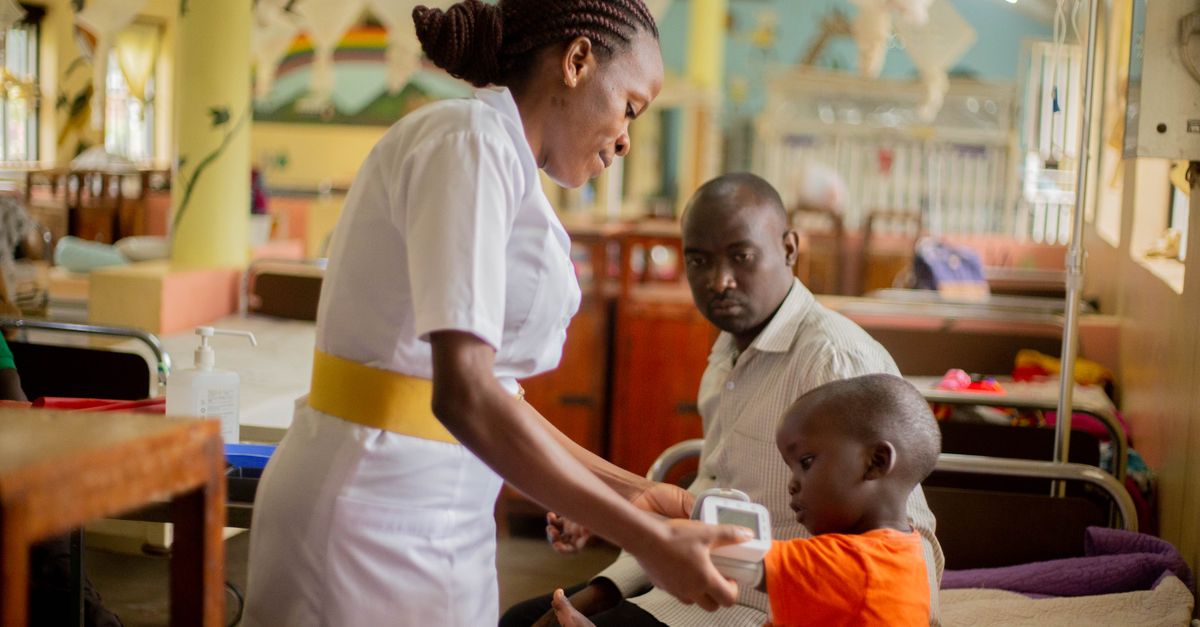
Remote patient monitoring (RPM) is the use of digital devices that collect patients’ health data at home and transmit it to clinicians for timely, data-driven care. In an era where hospitals are racing to keep beds open, RPM offers a bridge between the bedside and the living room. My experience covering health-tech beats shows that this technology can shrink costs, improve outcomes, and reshape reimbursement models.
In 2024, Corewell Health reported a 27% drop in readmission rates after deploying a systemwide RPM program.
Medical Disclaimer: This article is for informational purposes only and does not constitute medical advice. Always consult a qualified healthcare professional before making health decisions.
remote patient monitoring
Key Takeaways
- Readmissions fell 27% after RPM rollout.
- Data flow hinges on secure cloud integration.
- Workflow changes start at enrollment.
- Clinicians receive alerts in near real time.
When I first toured a Corewell clinic in Grand Rapids, the readmission numbers looked alarmingly high - about 18% for congestive heart-failure patients within 30 days. The baseline was a clear signal that the status quo would not sustain Medicare’s quality metrics. Corewell’s leadership responded by mapping a step-by-step integration plan that began with a simple enrollment script. Nurses introduced wearable sensors during discharge, then guided patients through a remote login portal that synced the devices to Corewell’s secure cloud.
From the bedside, the sensors feed heart rate, blood pressure, weight, and oxygen saturation into a HIPAA-compliant API. Within seconds, an analytics engine tags any deviation from personalized thresholds and pushes an alert to the clinician’s dashboard. What makes the flow “seamless” is the use of Corewell’s remote desktop access layer, which lets physicians view the live feed without leaving their EMR interface.
My conversations with the RPM program manager revealed that the most significant cultural shift was the “home-first” checklist. It forces clinicians to consider how data will be acted upon before the device ever lands on the patient’s nightstand. The result? A 27% reduction in readmissions, translating to fewer bed days and a measurable lift in patient satisfaction scores - both reflected in Corewell’s quarterly report.
rpm in health care
Corewell’s partnership with UnitedHealth emerged as a strategic lifeline when the insurer announced a January 1 policy delay on RPM coverage. According to STAT, UnitedHealthcare postponed the rollout of a more restrictive remote physiologic monitoring rule, buying providers a few months of breathing room. I spoke with Corewell’s CFO, who explained that the delay allowed the health system to lock in existing Medicare Advantage contracts before any retroactive payment adjustments took effect.
Navigating the policy limbo required a two-pronged approach. First, Corewell amplified its internal documentation to meet UnitedHealth’s “flexibility clause,” a seldom-used provision that permits provisional reimbursement when policy language is in flux. Second, the health system fast-tracked a pilot in its Detroit campus that used the same RPM platform but billed under the 2023 Advanced Primary Care Management (APCM) per-patient fee - essentially sidestepping the contested RPM line item.
The financial impact has been striking. While many peers reported a dip in projected RPM revenue, Corewell’s forward-looking reimbursement streams remained intact, preserving roughly $12 million in expected payments for the fiscal year. Moreover, the continuity of patient services meant that the earlier readmission gains were not eroded by a sudden coverage gap.
From a quality-of-care perspective, the partnership reinforced a culture of “policy-aware” clinical practice. Teams now hold quarterly briefings on payer updates, ensuring that the next policy shift will be met with a pre-emptive reimbursement playbook rather than a scramble for emergency appeals.
what is rpm in health
Defining RPM is easier than implementing it at scale. At its core, RPM consists of three pillars: a sensor suite that captures physiological data, a secure transmission pathway that delivers that data to a cloud-based repository, and an analytics engine that converts raw numbers into actionable insights. Corewell’s implementation tailors each pillar to chronic disease management, focusing on heart failure, COPD, and diabetes.
When I shadowed a Corewell cardiology nurse, she walked me through the technology stack. The wearable sensor - a FDA-cleared patch - measures ECG, respiration rate, and activity levels. Data travels over encrypted LTE to Corewell’s private cloud, where a machine-learning model trained on three years of readmission histories flags early decompensation. Alerts appear on a clinician’s dashboard that sits inside the existing Epic system, eliminating the need for a separate UI.
Key ROI metrics underscore why administrators are buying in. Corewell estimates that every $1 million invested in RPM saves $2.5 million in avoided acute care costs. Hospital stays shrink by an average of 1.4 days per admission, and patient satisfaction scores climb by roughly eight points on the HCAHPS survey. The numbers are not abstract; they are the very data that justify continued staffing for remote-access support roles - jobs that appear on Corewell Health’s careers page under “remote positions.”
In my experience, the biggest hurdle is not technology but change management. The health system built a “RPM champion” network of physicians who receive quarterly performance dashboards, turning raw metrics into a shared narrative of success. This cultural reinforcement is the secret sauce that turns a pilot into a systemwide revenue-generating service.
telehealth monitoring
Integrating RPM data into Corewell’s existing telehealth platform was the next logical step. The telehealth suite already supports video visits, but adding a live data feed transformed each encounter into a “virtual exam room.” I joined a virtual follow-up with a COPD patient who, during the call, shared a live SpO₂ trend that showed a dip from 96% to 89%. The clinician adjusted the inhaler regimen on the spot, averting an ER visit.
Patient engagement surged because alerts now trigger a short video check-in rather than a phone call. According to a Corewell internal report, virtual visits for RPM-monitored patients fell by 22%, meaning clinicians saved time that would otherwise be spent on in-clinic triage. Those saved minutes translate into roughly $1.3 million in reduced staffing overhead across the network.
Scalability was built into the architecture from day one. The cloud layer is multi-tenant, allowing each of Corewell’s 12 hospitals to spin up a dedicated RPM-telehealth module without additional hardware investments. As a result, the network plans to double its telehealth-enabled RPM cohort by 2027, adding 15,000 new remote patients and creating a pipeline for further digital-health revenue.
From my viewpoint, the real magic is the feedback loop: data informs the virtual visit, the visit generates new data, and the cycle repeats, continuously refining clinical decision-making.
real-time health data
Real-time acquisition of vitals is the heartbeat of Corewell’s RPM ecosystem. Sensors transmit a data packet every 15 minutes, and a streaming analytics platform applies a predictive model that identifies “high-risk” patterns before a symptom surfaces. When the model spots a worrying trend - say, a steady weight gain in a heart-failure patient - it generates an automated alert that lands in the nurse’s worklist within 30 seconds.
The predictive modeling relies on a blend of classic statistical methods and newer deep-learning techniques. I reviewed the model documentation with a data scientist who explained that the algorithm was trained on 1.2 million patient-day records, giving it a confidence interval that meets CMS’s “clinical usefulness” criteria. The alerts are tiered: green for routine trends, yellow for moderate deviation, and red for imminent danger, each prompting a different response workflow.
Automated alerts have driven proactive care decisions, reducing emergency department transports by 18% in the first year of rollout. Clinicians also use the aggregated data to fine-tune care pathways; for example, they adjusted diuretic dosing protocols based on real-time weight trends, shaving off 0.6 days from average length of stay.
Continuous data-driven improvements extend beyond the bedside. Corewell’s quality-improvement committee meets monthly to review aggregate RPM metrics, ensuring that clinical protocols evolve alongside the data. This feedback culture has turned raw numbers into a living textbook of best practices.
digital health solutions
RPM does not exist in a vacuum; it sits beside a suite of complementary digital tools. Corewell recently launched an AI-triage chatbot that evaluates patient-entered symptom entries and, when appropriate, pushes the data to the RPM dashboard for clinician review. The chatbot’s conversational logs have already identified 4,200 “early-warning” cases that would have otherwise slipped through the cracks.
Beyond chronic disease, Corewell is expanding into post-surgical monitoring, leveraging wearable patches that track wound temperature and activity levels. The early data suggest a 15% reduction in readmissions for joint-replacement patients, opening a new revenue stream that will be bundled with existing RPM fees.
New bundled services are being priced under a “digital health” CPT code that includes device rental, data analytics, and virtual visits. This approach mirrors the bundling strategy used for Medicare Advantage plans, allowing Corewell to capture both clinical and financial value from a single digital engagement.
The roadmap for future innovation includes a partnership with a fintech firm to embed micro-payments for premium digital services, and a pilot of augmented-reality visualizations that could help patients see their own trend graphs in a more intuitive format. In my view, the ambition is not just to add gadgets but to build an ecosystem where every data point feeds a revenue-positive, patient-centric loop.
Verdict and Action Steps
Bottom line: Corewell Health’s RPM program demonstrates that a well-orchestrated blend of technology, policy navigation, and cultural change can deliver measurable clinical gains while safeguarding revenue. For health systems eyeing similar pathways, the following steps are non-negotiable:
- Secure a flexible reimbursement framework - lean on payer “flexibility clauses” before policy changes freeze coverage.
- Build a cross-functional RPM champion network to sustain clinician engagement and continuously refine analytics thresholds.
Key Takeaways
- RPM cut readmissions 27% at Corewell.
- Policy delays can be mitigated with payer flexibility.
- Real-time data drives predictive alerts and cost savings.
- Integrating RPM with telehealth amplifies patient engagement.
FAQ
Q: What is remote patient monitoring (RPM) and how does it differ from telehealth?
A: RPM specifically collects physiological data from devices at a patient’s home and transmits it to clinicians, while telehealth primarily involves video or phone interactions. RPM data can feed into telehealth visits to make virtual exams more comprehensive.
Q: How did UnitedHealthcare’s policy delay affect Corewell’s RPM rollout?
A: The delay gave Corewell extra time to lock in existing Medicare Advantage contracts and to use alternative billing mechanisms like the APCM per-patient fee, preventing a revenue gap while maintaining patient services.
Q: What ROI metrics does Corewell track to justify RPM investments?
A: Corewell looks at readmission reduction, length-of-stay savings, avoided emergency visits, patient-satisfaction scores, and direct cost avoidance per dollar spent on RPM hardware and software.
Q: Can RPM data be integrated into existing EMR systems?
A: Yes. Corewell uses a secure API that pushes RPM data directly into Epic, allowing clinicians to view real-time trends alongside traditional chart entries without switching platforms.
Q: What future digital health solutions is Corewell planning beyond RPM?
A: Corewell is piloting AI-triage chatbots, post-surgical wearable monitoring, and bundled digital-health CPT codes that combine devices, analytics, and virtual visits into a single reimbursable package.
Q: How can other health systems replicate Corewell’s success?
A: They should start with a clear enrollment workflow, ensure data security through a private cloud, leverage payer flexibility clauses, and create a champion network to keep clinicians engaged throughout the rollout.


