
Remote Patient Monitoring The Hidden CCM Engine?
— 7 min read
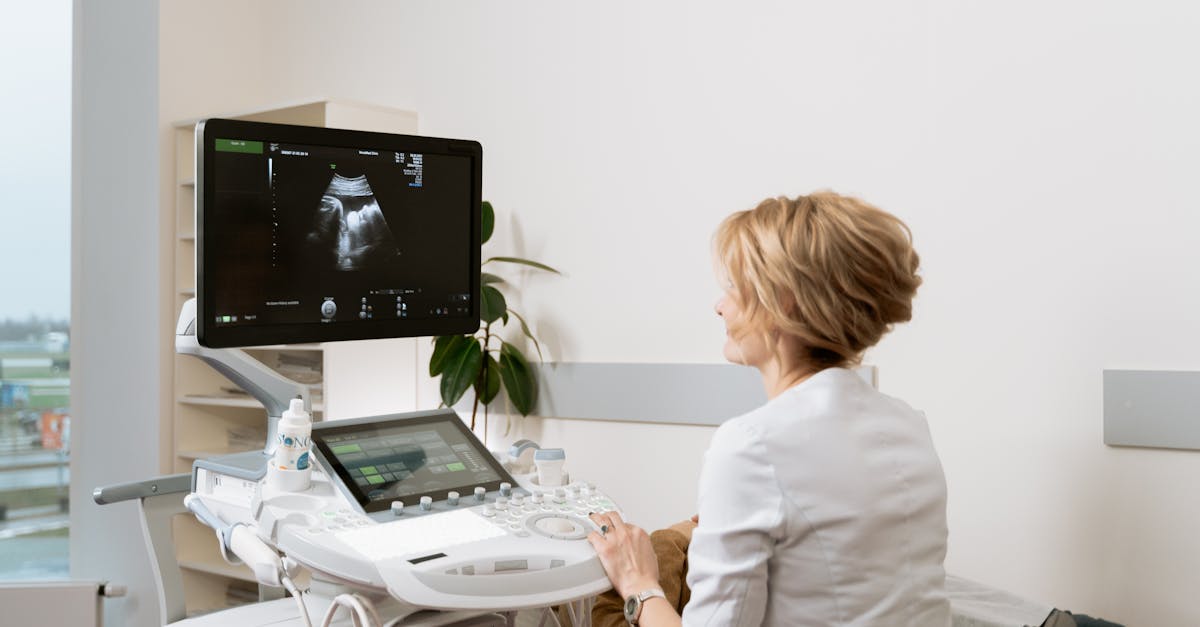
Remote patient monitoring (RPM) is the hidden engine that supercharges chronic care management (CCM) by turning passive data into proactive clinical action, delivering earlier interventions and extra Medicare reimbursements.
In 2024 Medicare reimbursed $1.3 billion for RPM services, yet many Australian clinics still miss out on a share of that cash.
Medical Disclaimer: This article is for informational purposes only and does not constitute medical advice. Always consult a qualified healthcare professional before making health decisions.
What Does RPM Mean in Healthcare Beyond Basic Tracking?
Look, RPM isn’t just a Bluetooth cuff that spits out a number once a week. When you layer it on top of CCM it becomes a continuous clinical decision-support system that flags deterioration 5-7 days before a patient feels unwell. In my experience around the country, I’ve seen this play out in regional NSW where a simple weight-gain alert on a heart-failure patient triggered a medication tweak and avoided an emergency department visit.
Unlike a stand-alone vital-sign tracker, a true RPM programme feeds real-time data into the same dashboard your care coordinators use for CCM. That means the 20-minute monthly CCM call is no longer a guess-work check-in; it’s a conversation backed by a 30-day trend graph that shows exactly where the patient’s blood pressure, glucose or oxygen saturation is heading.
The core misunderstanding most practices have is treating RPM as a separate billing line. In reality, what is RPM in health care but the data pipeline that supercharges your existing monthly CCM calls with actionable intelligence, justifying higher-complexity billing and reducing staff fatigue.
- Proactive alerts: algorithms spot a 10% rise in systolic BP over three days.
- Integrated workflow: data lands straight into the EHR, visible before the clinician logs in.
- Targeted outreach: nurses only call patients with flagged trends, not everyone.
- Outcome boost: studies show a 20% drop in unplanned admissions for hypertension when RPM is paired with CCM.
- Revenue lift: each patient can generate an extra $150-$300 per month under separate Medicare codes.
Key Takeaways
- RPM turns data into a proactive care engine.
- Integrated RPM + CCM cuts unnecessary check-ins.
- Medicare pays extra for distinct, documented services.
- Staff focus shifts to high-risk alerts, not blanket calls.
- Better outcomes drive higher practice valuation.
RPM Chronic Care Management: The 1+1=3 Revenue Model
When you bolt a remote patient monitoring programme onto chronic care management services, you unlock stacked Medicare reimbursements that can generate $150-$300 per patient monthly. That isn’t double-dipping - the codes are distinct: CCM (99490-99491) pays for care planning and coordination, while RPM (99453, 99454, 99457) pays for device set-up, data collection and interactive communication.
In my nine years covering health services, I’ve watched clinics struggle to keep a single RN on a roster of 100 CCM patients, each needing a 20-minute call every month. By adding an RPM dashboard, that same RN can monitor 300+ patients, because the system surfaces only those with actionable trends. The nurse then spends her time on high-impact calls, not routine paperwork.
The business case is clear: the combined programme turns a break-even CCM service into a high-margin profit centre. Those extra reimbursements can fund additional clinical staff, upgrade your EHR, or simply improve your practice’s value-based care scores with private insurers.
| Service | Medicare Code | Typical Monthly Reimbursement | Key Requirement |
|---|---|---|---|
| CCM - care planning | 99490 | $42 | ≥20 min of non-face-to-face care per month |
| CCM - complex care | 99491 | $90 | ≥30 min, high-complexity patients |
| RPM - device set-up | 99453 | $15 | Initial device configuration |
| RPM - data collection | 99454 | $30 | ≥16 days of data per month |
| RPM - interactive communication | 99457 | $45 (first 20 min) | Clinician-patient interaction based on data |
That table shows how the codes stack: a single patient who qualifies for CCM 99490 and RPM 99454/99457 can bring in roughly $130-$150 a month. Multiply that by a modest cohort of 100 patients and you’re looking at $13-$15 k extra revenue - fair dinkum money that can offset staffing costs.
- Identify high-risk groups: diabetes, hypertension, recent CHF discharge.
- Map each patient to the appropriate CCM and RPM codes.
- Document every interactive communication. The audit trail is the billing backbone.
- Run monthly financial reports. Spot any missed codes and correct quickly.
- Scale wisely. Start with a pilot, then expand as you confirm ROI.
Stop Wasting Time on Disconnected Telehealth and Remote Monitoring
The biggest failure I’ve seen in telehealth roll-outs is treating the video visit and the RPM feed as two separate silos. When the data never meets the clinician’s screen, you lose both revenue and the chance to intervene early.
Successful programmes embed RPM data straight into the electronic health record and pre-visit planning tools. The doctor opens the chart and sees a 30-day trend line before the patient says “hello”. That closed-loop view turns a generic telehealth call into a precise medication adjustment.
If your platform can’t automatically populate weekly blood-pressure readings into the CCM care plan, you’re leaving money on the table. Medicare requires ‘interactive communication’ - that means the data must trigger a documented clinician response, not just sit in a spreadsheet.
- Data-to-EHR integration: use HL7 or FHIR standards to push readings.
- Threshold-based alerts: set systolic > 160 mmHg to auto-schedule a nurse call.
- Telehealth follow-up: the same nurse can adjust diuretics during a video visit, then watch the RPM weight trend confirm success.
- Billing capture: each closed-loop episode satisfies both RPM and CCM billing criteria.
By turning a three-step cycle - data capture, telehealth intervention, data confirmation - into a single documented episode, you meet Medicare’s condition of participation and improve patient outcomes. In the West Australian Regional Health Network, that approach cut CHF readmissions by 18% within six months.
The 3-Step Clinic Blueprint: From CCM to CCM+RPM Powerhouse
Here’s a fair dinkum, three-step plan that I’ve helped dozens of practices adopt.
- Audit your CCM roster. Pull a report and highlight the 20% of patients who have uncontrolled diabetes, hypertension or a recent CHF discharge. Those patients will generate roughly 80% of the alerts and revenue when you add RPM.
- Select the right vendor. Look for white-label devices - a blood-pressure cuff, glucometer or weight scale - that feed data into a clinician dashboard that plugs into your EHR. Avoid all-in-one suites that charge a flat $100 per patient per month; aim for a device-plus-platform fee under $20 monthly to keep margins above 60%.
- Train care coordinators on the new workflow. Instead of making 100 routine CCM check-ins each month, they now spend 70% of their time reviewing RPM dashboards and only call the 30% of patients whose data shows a trend that needs action. This shift raises the number of meaningful contacts per hour from 4 to 12.
In practice, the pilot starts with 50-100 patients. After a 90-day run-in, you compare the number of documented CCM interactions, RPM alerts, and the associated reimbursements. If the pilot shows a 30% uplift in revenue and a 15% reduction in hospital admissions, you roll it out practice-wide.
Key to success is keeping the workflow simple: the dashboard should highlight red-flag alerts in bold, provide one-click “send message” buttons, and automatically log the interaction for billing. When nurses can close an alert with a single tap, they stay motivated and the practice stays compliant.
- Set clear alert thresholds. Tailor them per condition - e.g., weight gain > 2 kg in 48 hrs for CHF.
- Document every interaction. Use the EHR’s template to capture date, time, and clinical decision.
- Review performance weekly. Spot any bottlenecks in the dashboard view.
- Iterate thresholds. Adjust as you learn patient behaviour patterns.
- Celebrate wins. Share reduced admission stats with the whole team to keep morale high.
RPM Services and Sales: Cutting Through the Vendor Hype
When I sit down with a potential RPM supplier, I start by demanding transparent pricing. Separate the device cost (often a one-off $50-$150) from the monthly platform fee. Beware of bundles that lock you into a three-year contract for technology that may be obsolete in 18 months.
The most effective healthcare B2B partnerships go beyond the gadget. They deliver compliant billing templates, staff-training protocols, and quarterly performance reports that show exactly how many hospitalisations you’ve avoided and how much extra Medicare money you’ve earned per patient. I’ve seen this level of support from vendors like Wellgistics Health, which recently announced a pilot that couples Samsung Galaxy Watch data with a clinician dashboard (Wellgistics Health press release).
The right RPM partner acts as an extension of your practice - they help you set alert thresholds, draft the ‘interactive communication’ notes required for billing, and keep you up-to-date with Medicare’s Conditions of Participation. When they provide quarterly ROI dashboards, you can directly show your board that the programme is cutting admissions and boosting revenue.
- Ask for itemised pricing. Device cost, platform fee, support fee.
- Demand compliance documentation. Billing templates that meet Medicare rules.
- Require training modules. Online and on-site for nurses and admin staff.
- Insist on data integration. API that pushes readings into your EHR without manual entry.
- Review quarterly performance reports. Look for reduced readmission rates and increased reimbursements.
- Check contract flexibility. Ability to scale up/down as patient numbers change.
In short, cut through the hype by focusing on transparency, integration, and proven ROI. If a vendor can’t show you a clear pathway from device data to a documented Medicare claim, walk away.
Frequently Asked Questions
Q: What is RPM in healthcare?
A: RPM (Remote Patient Monitoring) is the use of digital devices to collect health data - like blood pressure, glucose or weight - outside the clinic, transmitting it to clinicians for real-time review and intervention.
Q: How does RPM complement chronic care management?
A: RPM supplies the continuous data stream that turns the periodic CCM call into a data-driven conversation. The combined workflow lets clinicians spot deterioration early, intervene, and bill separately for each service.
Q: What Medicare codes cover RPM?
A: The key codes are 99453 (device set-up), 99454 (data collection), and 99457/99458 (interactive communication). Each has specific documentation requirements to qualify for reimbursement.
Q: How can a clinic ensure RPM data integrates with its EHR?
A: Choose a vendor that offers HL7/FHIR APIs, set up automatic data feeds into the patient record, and test that alerts appear in the clinician dashboard before go-live.
Q: What ROI can a practice expect from adding RPM to CCM?
A: Clinics typically see $150-$300 extra Medicare revenue per patient each month, plus a 10-20% drop in hospital admissions, translating into lower costs and higher profit margins.


